1. บทนำ
This manual provides detailed instructions for the Waveshare ESP32-P4-NANO High-Performance Development Board. It is designed to assist users in understanding the board's features, setting it up, and utilizing its capabilities effectively. The ESP32-P4-NANO is based on the ESP32-P4 chip, featuring RISC-V dual-core and single-core processors, and is equipped with various human-machine interfaces.
This specific kit, ESP32-P4-NANO-KIT-A, includes the ESP32-P4-NANO board, an RPi Camera (B), an 8Ω 2W speaker, and an FFC 15PIN cable, providing a comprehensive platform for development projects.

Image 1.1: The Waveshare ESP32-P4-NANO Development Board bundled with an RPi Camera and speaker.
2. เนื้อหาบรรจุภัณฑ์
ตรวจสอบว่ามีสินค้าทั้งหมดที่ระบุไว้ด้านล่างนี้อยู่ในบรรจุภัณฑ์ของคุณ หากมีส่วนประกอบใดสูญหายหรือเสียหาย โปรดติดต่อฝ่ายสนับสนุนลูกค้า
- 1x ESP32-P4-NANO Development Board
- 1x RPi Camera (B)
- 1x 8Ω 2W Speaker
- 1x FFC 15PIN Cable

Image 2.1: Visual representation of the ESP32-P4-NANO-KIT-A package contents, including the development board, RPi Camera (B), 8Ω 2W speaker, and FFC 15PIN cable.
3. คุณสมบัติหลัก
The ESP32-P4-NANO Development Board offers a robust set of features for advanced embedded applications:
- High-performance MCU: Features RISC-V 32-bit dual-core and single-core processors.
- หน่วยความจำ: Includes 128 KB HP ROM, 16 KB LP ROM, 768 KB HP L2MEM, 32 KB LP SRAM, 8 KB TCM.
- Image and Voice Processing: Provides interfaces for JPEG Codec, Pixel Processing Accelerator, Image Signal Processor, and H264 encoder.
- Integrated PSRAM and Flash: 32MB PSRAM in the chip's package, with onboard 16MB Nor Flash.
- Extensive Peripherals: Supports MIPI-CSI, MIPI-DSI, USB 2.0 OTG, Ethernet, SDIO 3.0 TF card slot, microphone, speaker header, and RTC battery header.
- GPIO: 2*2*13 GPIO headers with 28 x programmable GPIOs.
- คุณสมบัติความปลอดภัย: Incorporates Secure Boot, Flash Encryption, cryptographic accelerators, and TRNG. Hardware access protection mechanisms enable Access Permission Management and Privilege Separation.
- การเชื่อมต่อไร้สาย: Onboard ESP32-C6-MINI module extends 2.4GHz Wi-Fi 6 and Bluetooth 5/BLE.

ภาพที่ 3.1: จบแล้วview of the ESP32-P4-NANO's core features, including RISC-V MCU, memory, and connectivity options.
4. ฮาร์ดแวร์โอเวอร์view
4.1 ส่วนประกอบของบอร์ด
The following diagram identifies the main components and interfaces on the ESP32-P4-NANO development board.

ภาพที่ 4.1: รายละเอียด view of the ESP32-P4-NANO board with numbered components and their descriptions.
- ESP32-P4NRW32
- ESP32-C6-MINI-1: SDIO interface protocol, extending Wi-Fi 6 and Bluetooth 5 for ESP32-P4-NANO
- Display interface: MIPI 2-lane
- Camera interface: MIPI 2-lane
- USB Type-C connector: for power supply, program burning and debugging
- USER-LED: power supply indicator
- BOOT button: Press it when powering on or resetting to enter download mode
- ปุ่มรีเซ็ต
- PoE module / external power supply header: for connecting external 5V power supply or PoE module power supply
- RTC battery header: for connecting rechargeable RTC battery (supports rechargeable RTC batteries only)
- Onboard microphone
- PoE module header
- Type-A Port: USB OTG 2.0 High Speed port
- RJ45 100M Ethernet port
- Speaker header: MX1.25 2P connector, supports 8Ω 2W speaker
- ส่วนหัว GPIO
- TF card slot: SDIO 3.0 interface protocol
4.2 คำจำกัดความของพิน
The pinout diagram illustrates the functionality of each GPIO pin on the development board, crucial for connecting external components and sensors.

Image 4.2: Pin definition diagram showing power, GPIO, USB, UART, Touch Channel, ADC Channel, RTC Clock source, and ESP32-C6 GPIO assignments.
4.3 ขนาดเค้าร่าง
Refer to the following diagrams for the physical dimensions of the ESP32-P4-NANO board, measured in millimeters.

ภาพที่ 4.3: ด้านบนและด้านล่าง view with precise measurements of the ESP32-P4-NANO development board.
5. คำแนะนำในการตั้งค่า
This section guides you through the initial setup of your ESP32-P4-NANO Development Board and its bundled accessories.
5.1 Connecting the RPi Camera (B)
- Locate the MIPI-CSI camera interface on the ESP32-P4-NANO board (refer to Image 4.1, component 4).
- Carefully insert one end of the FFC 15PIN cable into the camera module's connector, ensuring the contacts face the correct direction.
- Insert the other end of the FFC 15PIN cable into the MIPI-CSI connector on the development board. Ensure a secure connection.

Image 5.1: The RPi Camera (B) module, compatible with Raspberry Pi series boards, featuring a 5MP OV5647 sensor.
5.2 การเชื่อมต่อลำโพง
- Identify the speaker header (MX1.25 2P connector) on the development board (refer to Image 4.1, component 15).
- Connect the 8Ω 2W speaker to this header. Ensure the polarity is correct if indicated.
5.3 การจ่ายไฟให้กับบอร์ด
The board can be powered via the USB Type-C connector. Connect a compatible USB cable from your computer or a 5V power adapter to the USB Type-C port on the board (refer to Image 4.1, component 5).
5.4 การตั้งค่าสภาพแวดล้อมการพัฒนา
For programming and development, it is recommended to use the Espressif IoT Development Framework (ESP-IDF) or the Arduino IDE with ESP32 board support. Refer to the official Waveshare Wiki for detailed instructions on setting up your development environment and obtaining exampรหัส
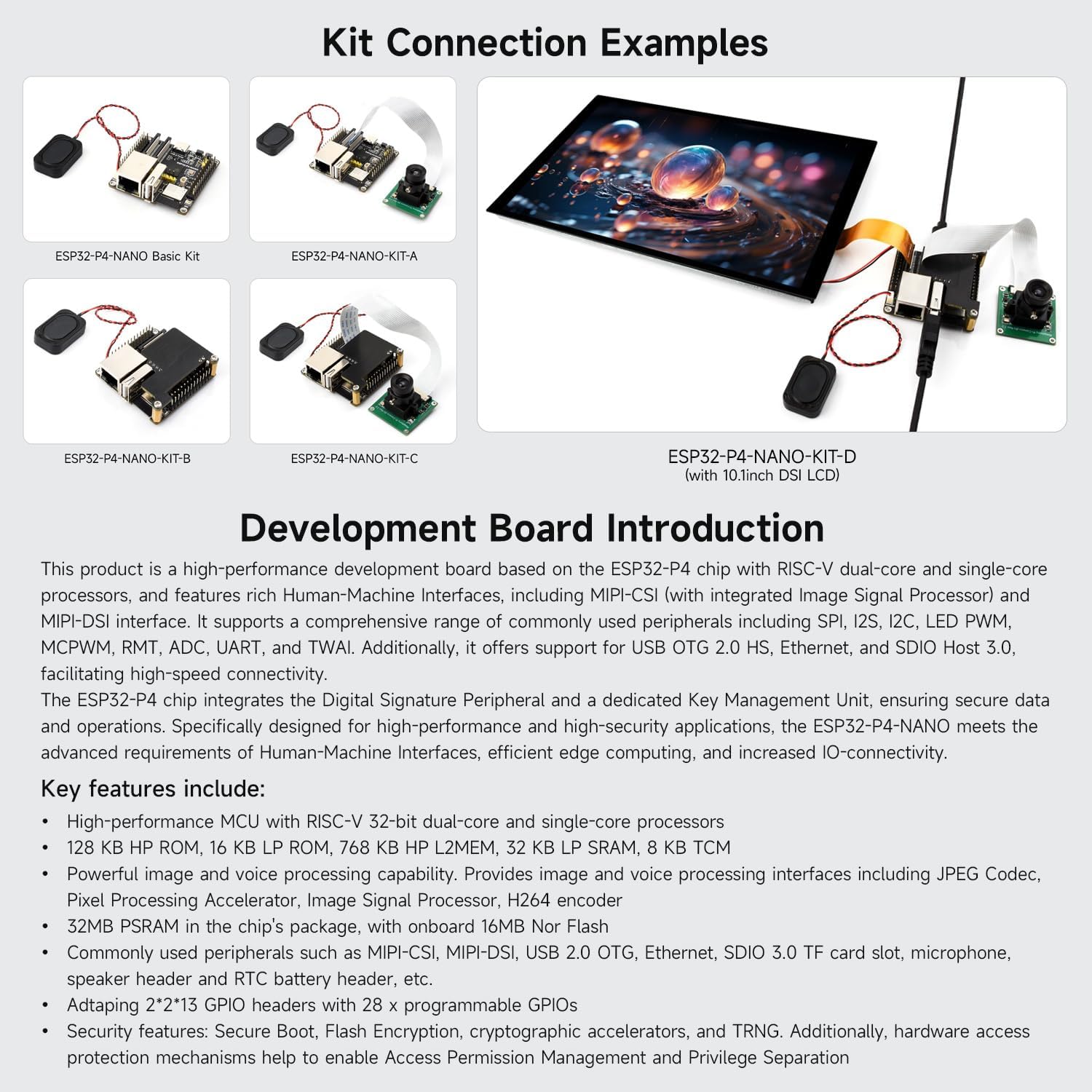
ภาพที่ 5.2: อดีตamples of how various kits, including KIT-A, can be connected, demonstrating the board with camera and speaker.
6. คู่มือการใช้งาน
Once the board is set up and programmed, follow these general guidelines for operation.
6.1 การทำงานพื้นฐาน
- เปิดเครื่อง: Connect the USB Type-C cable to a power source. The USER-LED (component 6) should illuminate, indicating power.
- Program Upload: Use your chosen IDE (ESP-IDF or Arduino) to compile and upload your code to the board via the USB Type-C port.
- การรีเซ็ตบอร์ด: Press the RESET button (component 8) to restart the loaded program.
- Download Mode: To enter download mode for flashing new firmware, press and hold the BOOT button (component 7) while pressing and releasing the RESET button, then release the BOOT button.
6.2 Utilizing Peripherals
- กล้อง: Access the RPi Camera (B) through the MIPI-CSI interface using appropriate libraries and code examples from the Waveshare Wiki or Espressif documentation.
- ผู้บรรยาย: Generate audio output via the speaker header. Ensure your code includes audio playback functionalities.
- การสร้างเครือข่าย: Utilize the 100Mbps Ethernet port (component 14) for wired network connectivity or the integrated Wi-Fi 6 and Bluetooth 5/BLE for wireless communication.
- พื้นที่จัดเก็บ: Insert a TF card into the SDIO 3.0 TF card slot (component 17) for external storage.
- GPIO: Connect various sensors, actuators, and other modules to the programmable GPIO headers (component 16) as required by your project.
7. การบำรุงรักษา
Proper maintenance ensures the longevity and reliable operation of your development board.
- การจัดการ: Always handle the board by its edges to avoid touching sensitive components. Use anti-static precautions when working with the board.
- การทำความสะอาด: รักษาพื้นผิวกระดานให้สะอาด ปราศจากฝุ่นและสิ่งสกปรก ใช้แปรงขนนุ่มแห้งหรือลมเป่าทำความสะอาด หลีกเลี่ยงการใช้น้ำยาทำความสะอาดชนิดเหลว
- พื้นที่จัดเก็บ: ควรเก็บแผงวงจรไว้ในถุงป้องกันไฟฟ้าสถิตในที่แห้งและเย็นเมื่อไม่ได้ใช้งาน
- แหล่งจ่ายไฟ: Use only recommended 5V power supplies. Over-voltagอาจทำให้บอร์ดเสียหายได้
- อัพเดตเฟิร์มแวร์: Regularly check the Waveshare Wiki for firmware updates and security patches to ensure optimal performance and security.
8 การแก้ไขปัญหา
หัวข้อนี้จะกล่าวถึงปัญหาทั่วไปที่คุณอาจพบเจอ
- เมนบอร์ดไม่เปิดใช้งาน:
- Ensure the USB Type-C cable is securely connected to both the board and a functional power source.
- ตรวจสอบว่าแหล่งจ่ายไฟจ่ายไฟ 5V
- Check if the USER-LED (component 6) illuminates.
- การอัปโหลดโปรแกรมล้มเหลว:
- โปรดตรวจสอบให้แน่ใจว่าได้เลือกบอร์ดและพอร์ตที่ถูกต้องใน IDE ของคุณแล้ว
- Try entering download mode manually by holding the BOOT button during reset.
- Ensure all necessary drivers are installed for the USB-to-serial converter.
- Camera Interface Issues:
- Some users have reported challenges with the camera interface functionality. Waveshare acknowledges this and suggests monitoring Espressif's official resources for potential software fixes or updated exampเลส.
- Ensure the FFC cable is correctly seated and not damaged.
- Verify that your code correctly initializes and accesses the MIPI-CSI interface.
- ไม่มีการเชื่อมต่อ Wi-Fi/บลูทูธ:
- Check your code for correct Wi-Fi/Bluetooth initialization and credentials.
- Ensure the ESP32-C6-MINI module is properly functioning.
For further assistance, consult the official Waveshare Wiki or contact their technical support.
9. ข้อมูลจำเพาะ
| คุณสมบัติ | รายละเอียด |
|---|---|
| ยี่ห้อ | เวฟแชร์ |
| ชื่อรุ่น | ESP32-P4-NANO-KIT-A |
| โปรเซสเซอร์ | ESP32-P4 (RISC-V 32-bit dual-core and single-core) |
| แรม | PSRAM ขนาด 32MB |
| หน่วยความจำแฟลช | 16MB หรือแฟลช |
| การเชื่อมต่อแบบไร้สาย | Wi-Fi 6 (802.11ax), Bluetooth 5/BLE (via ESP32-C6-MINI) |
| อีเธอร์เน็ต | 100Mbps RJ45 |
| ยูเอสบี | USB 2.0 OTG (Type-A Port), USB Type-C (Power/Debug) |
| อินเทอร์เฟซกล้อง | MIPI-CSI 2-lane |
| หน้าจอแสดงผล | MIPI-DSI 2-lane |
| พื้นที่จัดเก็บ | SDIO 3.0 TF card slot |
| GPIO ย่อมาจาก GPIO | 28 programmable GPIOs (2*2*13 headers) |
| เสียง | Onboard microphone, Speaker header (8Ω 2W speaker included in kit) |
| ขนาด | 50 x 50 mm (approximate board size) |
| น้ำหนัก | ~9.5 ounces (total item weight) |
10. การสนับสนุนและทรัพยากร
For the most up-to-date information, detailed tutorials, and example code, please refer to the official Waveshare Wiki. This resource is regularly updated and provides comprehensive documentation for all Waveshare products.
- Official Waveshare Wiki: https://www.waveshare.com/wiki (Please note: specific product page link may vary, search for "ESP32-P4-NANO")
- การสนับสนุนด้านเทคนิค: If you encounter issues not covered in this manual or the Wiki, please contact Waveshare customer support through their official webเว็บไซต์.
Information regarding warranty is typically provided with the product packaging or available on the manufacturer's official webเว็บไซต์.


