
การแนะนำ
Thank you for choosing the VonHaus Electric HVLP Spray Gun. This manual provides essential information for the safe and effective use, maintenance, and troubleshooting of your new paint sprayer. Please read these instructions thoroughly before initial use and retain them for future reference.

The VonHaus Electric HVLP Spray Gun, including the main unit, spray gun attachment, air hose, and cleaning tools.
ข้อมูลด้านความปลอดภัย
คำเตือน: ปฏิบัติตามข้อควรระวังด้านความปลอดภัยพื้นฐานเสมอเมื่อใช้เครื่องใช้ไฟฟ้า เพื่อลดความเสี่ยงต่อการเกิดไฟไหม้ ไฟฟ้าช็อต และการบาดเจ็บส่วนบุคคล
- อ่านคำแนะนำทั้งหมด: โปรดทำความคุ้นเคยกับปุ่มควบคุมและวิธีการใช้งานอุปกรณ์อย่างถูกต้อง
- สวมใส่อุปกรณ์ป้องกันส่วนบุคคล (PPE) ที่เหมาะสม: This includes safety glasses, a respirator mask, gloves, and protective clothing.
- ตรวจสอบให้แน่ใจว่ามีการระบายอากาศที่เหมาะสม: Use the spray gun in a well-ventilated area to avoid inhaling fumes.
- วัสดุไวไฟ: อย่าฉีดพ่นวัสดุไวไฟใกล้เปลวไฟ ไฟนำร่อง หรือแหล่งกำเนิดประกายไฟอื่นๆ
- ความปลอดภัยทางไฟฟ้า: Ensure the power cord is undamaged and connected to a grounded outlet. Do not expose the unit to rain or wet conditions.
- ปกป้องเด็กและผู้เห็นเหตุการณ์ให้ห่างไกล: Do not allow children or untrained persons to operate the spray gun.
- การยึดชิ้นงานให้แน่น: Always ensure the item being sprayed is stable and secure.
- การทำความสะอาด: ถอดปลั๊กไฟก่อนทำความสะอาดหรือบำรุงรักษาทุกครั้ง
ส่วนประกอบของผลิตภัณฑ์
The VonHaus Electric HVLP Spray Gun consists of several key parts:
- หน่วยมอเตอร์: The main power unit that generates airflow.
- ปืนฉีด: The handheld component where paint is atomized and sprayed.
- ท่ออากาศ: Connects the motor unit to the spray gun.
- ภาชนะสี: Attaches to the spray gun to hold the paint material.
- Nozzle/Air Cap: Controls the spray pattern.
- ปุ่มควบคุมการไหล: Adjusts the volume of paint sprayed.
- Viscosity Cup: Used for measuring paint viscosity.
- Cleaning Brush & Needle: For maintenance and cleaning.

ภาพระยะใกล้ view of the spray gun's trigger, flow control knob, and adjustable valve, which allow for precise control over paint application.
การตั้งค่า
1. Material Preparation (Thinning & Straining)
Proper material preparation is crucial for optimal spray performance and to prevent clogging. Always refer to the paint manufacturer's instructions for thinning recommendations.
- Stir thoroughly: Always stir the spraying material thoroughly before measuring viscosity.
- Measure viscosity: Use the provided viscosity cup. Dip the cup completely into the material and measure the time in seconds until the cup empties. This is the 'Runout Time'.
- การทำให้ผอมบาง: If the runout time is too long, thin the material with the appropriate solvent (e.g., water for latex, mineral spirits for oil-based paints) until the desired viscosity is achieved. Do not use materials with a flashpoint below 102°F (39°C). Maximum viscosity: 60 DIN-S.
- Strain material: Always strain the prepared material to remove any impurities or lumps that could clog the nozzle.

Diagram illustrating the use of the viscosity cup and a thinning chart providing recommended runout times for various materials like oil enamel, oil-based primer, oil stain, clear sealer, polyurethane, and varnish.
2. การประกอบ
- Connect the air hose to both the motor unit and the spray gun securely.
- Fill the paint container with your prepared and strained material.
- Attach the filled paint container to the spray gun, ensuring it is tightly sealed.
- Select the desired spray pattern by rotating the air cap.
การดำเนินการ
1. การปรับรูปแบบการพ่น
The spray gun offers three adjustable spray patterns: horizontal, vertical, and circular. To change the pattern, rotate the air cap to align the 'ears' with the desired orientation:
- แนวนอน: สำหรับการฉีดพ่นขึ้นลง
- แนวตั้ง: For spraying side-to-side motions.
- หนังสือเวียน: เหมาะสำหรับพื้นที่ขนาดเล็กหรืองานที่ต้องการความละเอียดสูง
2. การควบคุมการไหล
The flow control knob on the spray gun allows you to adjust the volume of paint being sprayed. Turn the knob clockwise to decrease flow and counter-clockwise to increase flow. Always test on a scrap piece of material to find the optimal setting.
3. เทคนิคการพ่น
- ระยะทาง: ถือปืนพ่นสีให้ห่างจากพื้นผิวประมาณ 6-12 นิ้ว (15-30 ซม.)
- ความเคลื่อนไหว: Move the gun in smooth, even strokes, keeping it perpendicular to the surface. Overlap each pass by about 50% to ensure even coverage.
- Trigger control: Press the trigger fully to start spraying and release it at the end of each stroke.
- ฝึกฝน: Always practice on a piece of scrap material to get a feel for the spray pattern and flow before starting your project.

A user demonstrating the VonHaus Electric HVLP Spray Gun in action, applying paint to a wooden surface, showcasing its use for outdoor projects.
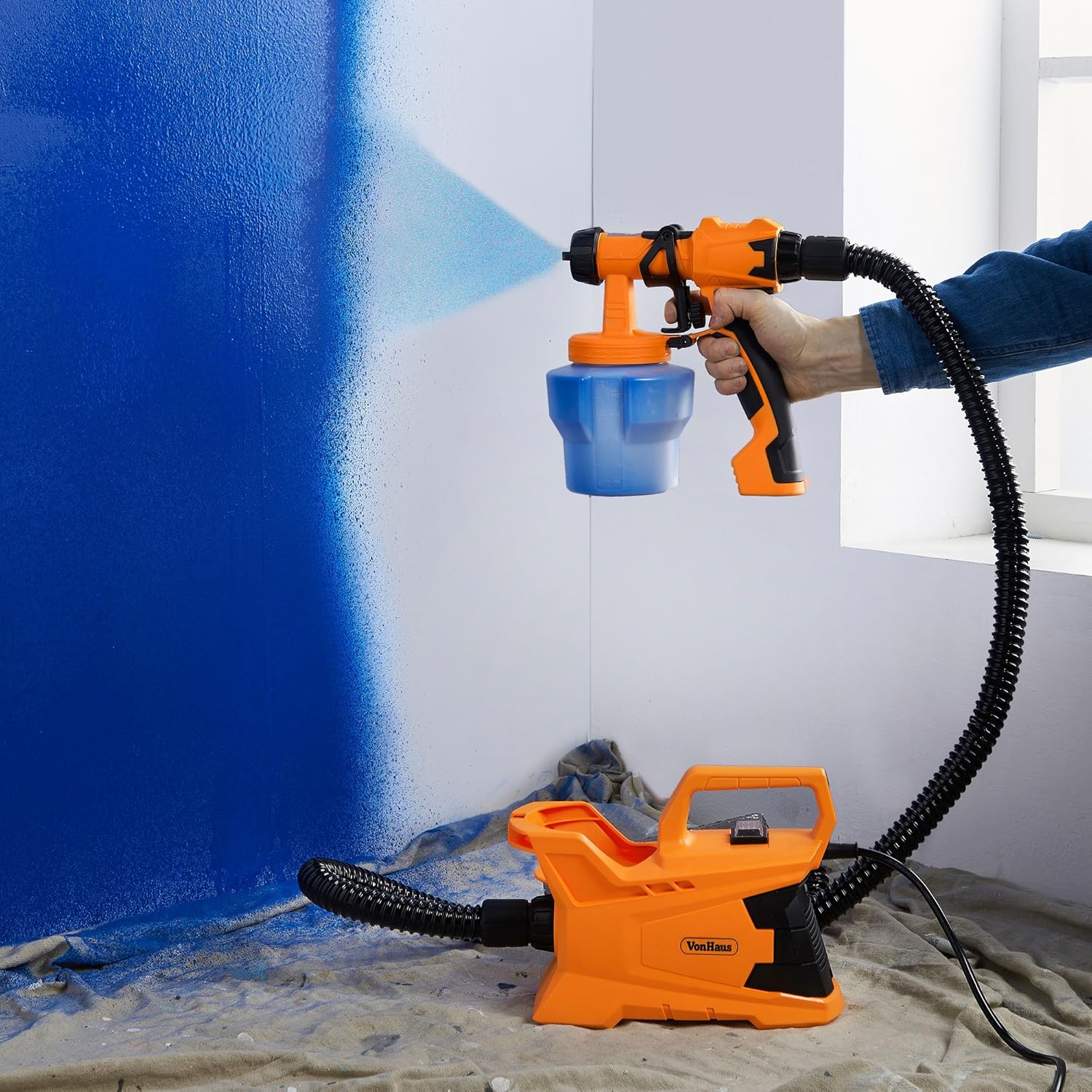
The VonHaus Electric HVLP Spray Gun being used to paint an indoor wall, illustrating its versatility for various painting tasks.
การซ่อมบำรุง
Thorough cleaning after each use is essential to prolong the life of your spray gun and ensure consistent performance.
1. ขั้นตอนการทำความสะอาด
- ตัดการเชื่อมต่อไฟฟ้า: ถอดปลั๊กเครื่องออกจากแหล่งจ่ายไฟทุกครั้งก่อนทำความสะอาด
- Empty container: Empty any remaining paint from the container back into its original can.
- Rinse container: Fill the container with the appropriate cleaning solution (water for latex, solvent for oil-based paints) and spray it through the gun into a waste container until clear.
- ถอดแยกชิ้นส่วน: Unscrew the paint container, remove the air cap, nozzle, and needle.
- ส่วนประกอบที่สะอาด: Use the provided cleaning brush and needle to thoroughly clean all disassembled parts, including the container, air cap, nozzle, and fluid tip. Pay special attention to small holes and crevices.
- Wipe down: Wipe the exterior of the spray gun and motor unit with a damp ผ้า.
- Dry and reassemble: Ensure all parts are completely dry before reassembling the spray gun.

A user cleaning the paint container and spray gun components under running water in a sink, demonstrating the ease of post-project cleanup.
2. การจัดเก็บ
Store the cleaned and reassembled spray gun in a dry, cool place, away from direct sunlight and out of reach of children.
การแก้ไขปัญหา
| ปัญหา | สาเหตุที่เป็นไปได้ | สารละลาย |
|---|---|---|
| ไม่พ่นหรือพ่นอ่อน | Clogged nozzle/fluid tip; Insufficient material; Air hose disconnected; Motor unit not running. | Clean nozzle/fluid tip; Refill container; Check air hose connection; Ensure power is on and motor is running. |
| รูปแบบการพ่นไม่สม่ำเสมอ | Incorrect air cap setting; Material too thick; Partially clogged nozzle. | Adjust air cap; Thin material further; Clean nozzle thoroughly. |
| สีอาจกระเด็นหรือหยดได้ | Material too thin; Nozzle loose; Air cap not seated correctly; Low material level. | Thicken material slightly; Tighten nozzle; Re-seat air cap; Refill container. |
| Motor unit overheating | Prolonged continuous use; Blocked air vents. | Allow unit to cool down; Clear any obstructions from air vents. |
ข้อมูลจำเพาะ
- ยี่ห้อ: ฟอนเฮาส์
- แบบอย่าง: B079TYFFZY
- ชื่อสไตล์: ปืน
- รูปแบบสเปรย์: 3 (Horizontal, Vertical, Circular)
- การควบคุมการไหล: ปรับได้
- ความหนืดสูงสุด: 60 DIN-S (approximate, refer to thinning chart)
การรับประกันและการสนับสนุน
For warranty information or technical support, please refer to the documentation provided at the time of purchase or contact VonHaus customer service directly. Keep your proof of purchase for any warranty claims.
For further assistance, visit the official VonHaus webเว็บไซต์หรือติดต่อทีมสนับสนุนลูกค้าของพวกเขา