
การแนะนำ
This manual provides detailed information regarding the operation, maintenance, and care of your 1995 Mazda 626. Familiarizing yourself with its contents will help ensure safe driving and prolong the life of your vehicle. Please read this manual thoroughly before operating your vehicle.
Keep this manual in your vehicle for quick reference. If you sell your vehicle, please leave this manual with it for the new owner.
การตั้งค่าและการตรวจสอบเบื้องต้น
Before driving your Mazda 626, perform the following initial checks to ensure safe operation.
Pre-Drive Checklist
- แรงดันลมยาง: Verify tire pressure is at recommended levels. Refer to the label on the driver's side door jamb.
- ระดับของเหลว: ตรวจสอบระดับน้ำมันเครื่อง น้ำหล่อเย็น น้ำมันเบรค และน้ำฉีดกระจกหน้ารถ
- ไฟ: Ensure all exterior lights (headlights, tail lights, turn signals) and interior lights are functioning.
- เบรค : Test brake pedal feel and parking brake engagement.
- กระจก: ปรับด้านหลังview and side mirrors for optimal visibility.
- เข็มขัดนิรภัย: Ensure all occupants are properly buckled.
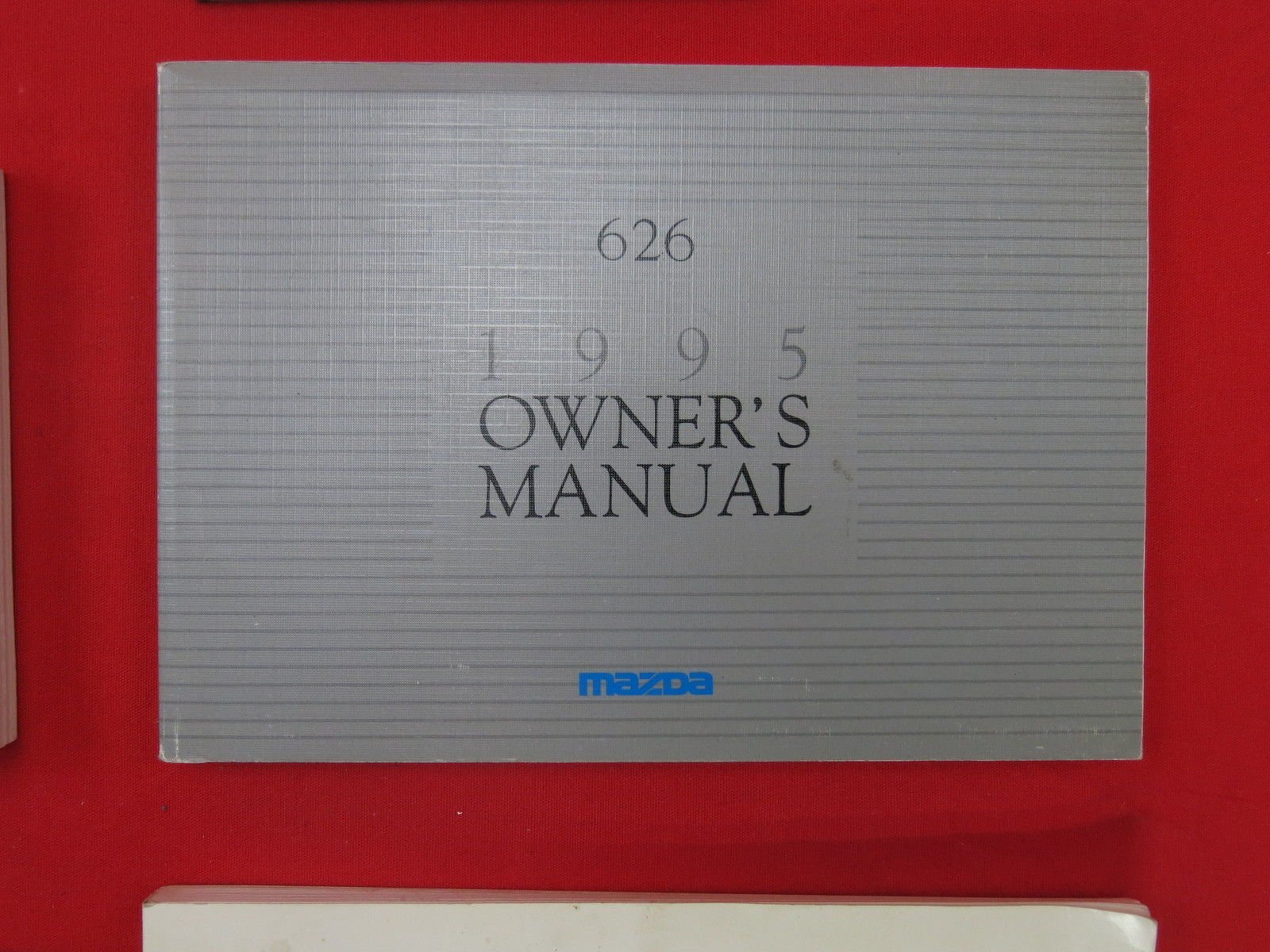
Image: Cover of the 1995 Mazda 626 Owner's Manual. This image displays the front cover of the official manual, featuring the Mazda logo and vehicle model year.
Operating Your Mazda 626
This section covers the basic operation of your vehicle's controls and features.
การสตาร์ทเครื่องยนต์
- ตรวจสอบให้แน่ใจว่าเกียร์อยู่ในตำแหน่งจอด (P) สำหรับเกียร์อัตโนมัติ หรือเกียร์ว่าง (N) สำหรับเกียร์ธรรมดา
- ใส่กุญแจเข้าไปในสวิตช์กุญแจ
- Turn the key to the "START" position and hold until the engine starts, then release. Do not crank for more than 10 seconds.
การควบคุมแดชบอร์ด
- ไฟหน้า: Located on the left stalk. Rotate for parking lights, headlights, and high beams.
- ที่ปัดน้ำฝน: Located on the right stalk. Adjust for intermittent, low, and high speeds.
- การควบคุมสภาพอากาศ: Dials and buttons in the center console for temperature, fan speed, and air distribution.
- ระบบเสียง: Refer to the separate audio system manual for detailed instructions.
ตารางและขั้นตอนการบำรุงรักษา
Regular maintenance is crucial for the longevity and performance of your Mazda 626. Adhere to the recommended service intervals.
Routine Checks (Every 5,000 miles or 6 months)
- เปลี่ยนถ่ายน้ำมันเครื่องและไส้กรองน้ำมันเครื่อง
- Inspect tire rotation and balance.
- Check all fluid levels and top up as necessary.
- Inspect brake pads and discs.
- Check all lights and horn operation.
Detailed Service (Every 15,000 miles or 12 months)
- เปลี่ยนไส้กรองอากาศ
- Inspect spark plugs.
- Check suspension components.
- Inspect exhaust system.
- Perform a comprehensive vehicle inspection.
การแก้ไขปัญหาทั่วไป
This section provides guidance for common problems you might encounter with your vehicle.
เครื่องยนต์จะไม่สตาร์ท
- แบตเตอรี่: Check battery terminals for corrosion and ensure they are tight. If the battery is dead, jump-start the vehicle.
- เชื้อเพลิง: ตรวจสอบให้แน่ใจว่ามีน้ำมันเชื้อเพลิงในถังเพียงพอ
- การจุดระเบิด: Confirm the key is fully inserted and turned correctly.
- อุปกรณ์ป้องกันการโจรกรรม: If equipped, ensure the immobilizer system is not active (check dashboard indicator).
ไฟเตือนสว่างขึ้น
- ไฟเตือนแรงดันน้ำมัน: Stop the vehicle immediately and check engine oil level. Do not drive with this light on.
- ไฟเตือนเบรค: Check brake fluid level. If low, add fluid. If the light persists, have the brake system inspected.
- ไฟตรวจสอบเครื่องยนต์: This indicates an emission control system malfunction. While often safe to drive short distances, it is recommended to have the vehicle inspected by a qualified technician.
ข้อมูลจำเพาะของรถยนต์
Key technical specifications for the 1995 Mazda 626.
| หมวดหมู่ | ข้อมูลจำเพาะ |
|---|---|
| ชนิดเครื่องยนต์ | 2.0L I4 DOHC (standard) / 2.5L V6 DOHC (optional) |
| ความจุถังเชื้อเพลิง | 15.9 US gallons (approx.) |
| ความจุน้ำมัน | 4.0 US quarts (with filter) |
| ความจุสารหล่อเย็น | 7.0 US quarts (approx.) |
| ขนาดยาง (มาตรฐาน) | P195/65R14 |
| น้ำหนักบรรทุก | 2,700 - 3,000 lbs (depending on configuration) |
Note: Specific specifications may vary based on trim level and regional variations. Always refer to the vehicle's data plate for precise information.


