
การแนะนำ
The MOOG K3082 Front Upper Suspension Ball Joint is engineered for reliable performance in American Motors Concord vehicles. This component is critical for maintaining proper wheel alignment and vehicle handling. It is designed for durability and ease of installation, ensuring a secure and stable connection within the suspension system.
คุณสมบัติหลัก
- ประสิทธิภาพที่เชื่อถือได้: Backed by superior materials and rigorous testing.
- แข็งแรงและทนทาน: Ball studs are heat processed to match or exceed OE requirements, inhibiting premature failure and improving fatigue strength.
- ข้อต่อแบบหล่อลื่น: Designed to inhibit corrosion and wear by allowing new lubricant to flush debris.
- ติดตั้งง่าย: Features precision tolerances for straightforward installation and steering alignment, ensuring a perfect fit.
- ความคุ้มครองที่ครอบคลุม: Available for both foreign and domestic nameplates.

Image: Illustration of the greasable design for easy maintenance.

Image: Illustration of the heat-treated stud for extra strength and durability.
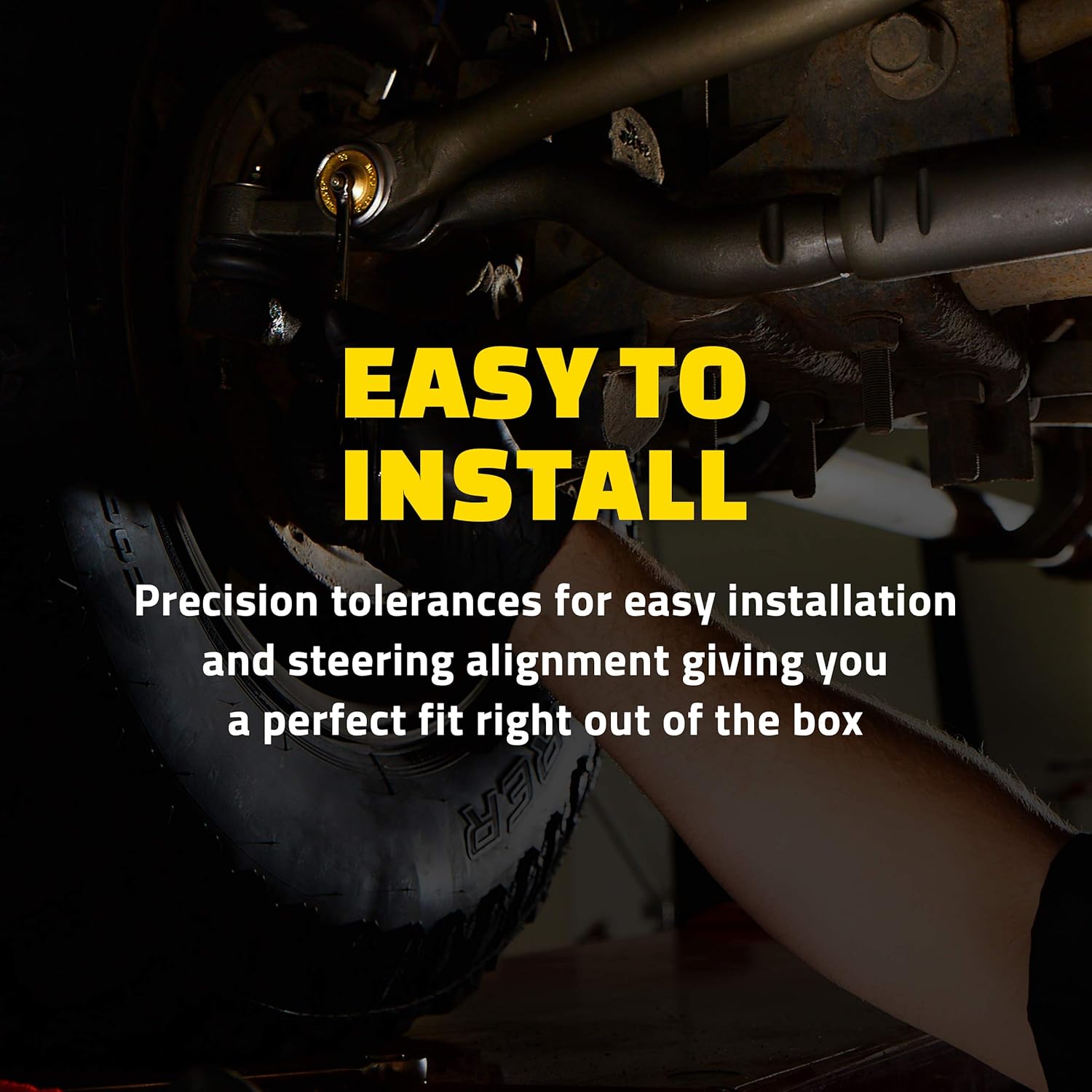
ภาพ: ภาพประกอบแสดงขั้นตอนการติดตั้งที่ง่ายดาย
สินค้าเกินview

Image: The MOOG K3082 ball joint and its included installation hardware.

Image: Another perspective of the MOOG K3082 ball joint and hardware.
การตรวจสอบและบำรุงรักษา
Regular inspection of ball joints is essential for vehicle safety and performance. Loose ball joints can lead to alignment issues, affecting handling and tire wear. It is recommended to check ball joints at regular intervals and during any wheel alignment procedures.
How to Inspect Ball Joints for Looseness
This video provides a detailed guide on how to determine if a ball joint is loose. While some manufacturers allow for a small amount of play within specifications, excessive looseness can still cause alignment and handling issues, especially if other suspension components are also loose.
Video: "How to Inspect Ball Joints for Looseness" by Federal Mogul Corporation. This video demonstrates the process of checking ball joints for looseness, including both load-carrying and non-load-carrying types.
Inspection Steps (Summary from Video):
- For Load-Carrying Ball Joints:
- Use a floor jack to raise one tire at a time, ensuring the suspension is unloaded and the upper control arm is not touching the frame.
- Use a pry bar to check for vertical looseness between the stud and ball joint housing.
- Check for horizontal looseness by grabbing the tire at the 3 and 9 o'clock positions and moving it in and out.
- For MacPherson Strut Suspensions (Radial Looseness):
- Lift the vehicle off the ground.
- Move the tire in and out by grabbing it at the 3 and 9 o'clock positions.
- For MacPherson Strut Suspensions (Axial Looseness):
- Use a pry bar to lift the weight of the unloaded tire and wheel assembly.
- If using a dial indicator, attach it to measure the axial looseness.
- For Non-Load Carrying/Follower Ball Joints:
- Ensure the suspension is unloaded.
- To check for horizontal looseness, push inward and pull outward on the wheel and tire assembly.
Always use your best judgment when inspecting ball joints and other chassis components to decide whether replacement is necessary.
ข้อมูลจำเพาะ
| คุณลักษณะ | ค่า |
|---|---|
| ผู้ผลิต | ผลิตภัณฑ์แชสซี MOOG |
| ยี่ห้อ | มู้ก |
| น้ำหนักสินค้า | 1.5 ปอนด์ |
| ขนาดสินค้า | 5.25 x 3.31 x 2.75 นิ้ว |
| หมายเลขรุ่นสินค้า | เค3082 |
| หมายเลขชิ้นส่วนของผู้ผลิต | เค3082 |
| หมายเลขชิ้นส่วน OEM | เค3082 |
| ตำแหน่ง | ด้านหน้า |
| ASIN | B000C57XLW |
| วันที่พร้อมใช้งานครั้งแรก | วันที่ 2 ธันวาคม 2005 |